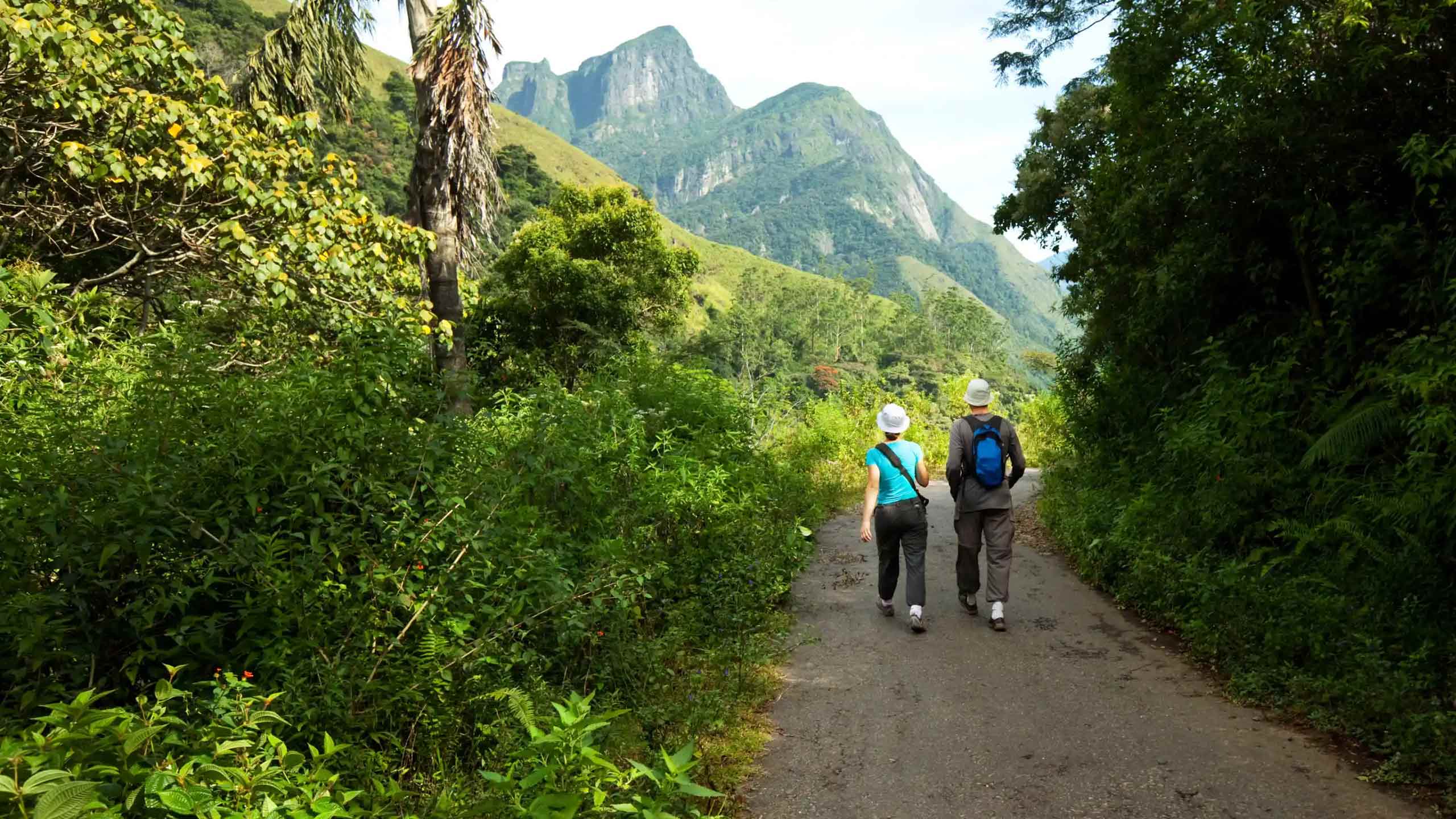
Sri Lanka, often celebrated for its beaches and cultural landmarks, is also a haven for hikers. From misty highlands to dense rainforests, the island offers a variety of walking trails that cater to all levels of fitness and interests. Here’s a guide to some of the best walking and hiking destinations in Sri Lanka.
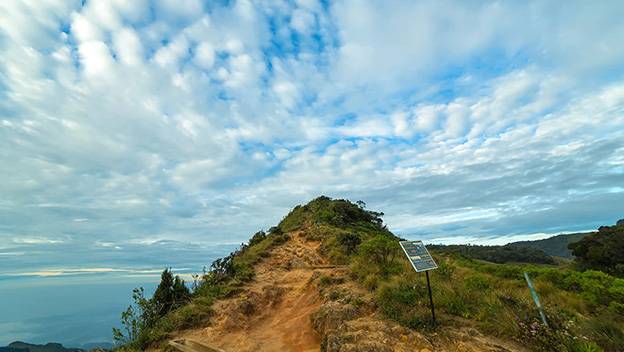
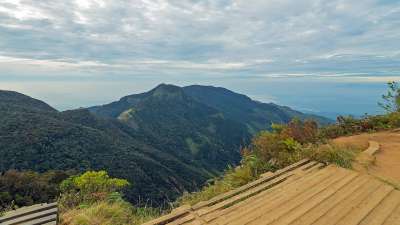
Worlds End in Horton Plains National Park (Photo Credit: Greens and Blues)
Horton Plains National Park: World’s End Trail
Highlights: Misty highlands, unique flora and fauna, and the iconic World’s End cliff
Trail Length: 9.5 km (6 miles) loop
Difficulty: Easy
Horton Plains National Park, elevated more than 2,000 metres above sea level, invites you into a realm of gossamer mist and windswept grasslands. This UNESCO World Heritage site is famed for its World’s End trail, which leads to a sheer precipice with an unforgettable 870-metre drop, revealing magnificent panoramas over tea country and southern plains. Along the path, you’ll encounter native flora such as dwarf bamboo, russet-tipped sumbul, and cloud forests echoing with the calls of the endemic Sri Lanka whistling thrush. Birdlife is abundant, and patient walkers may glimpse the rare Sri Lankan bush warbler or the striking Sri Lanka blue magpie. Expect to cross through forests alive with purple-faced langur monkeys, herds of sambar deer, and, if fortune favours you, perhaps the footprints of elusive leopards. Baker’s Falls—a cascade framed by rhododendrons—serves as a tranquil midpoint during the loop.
Best time to walk: The best time to savour Horton Plains is between January and March, before the monsoon veils the view with clouds and rain.
Knuckles Mountain Range
Highlights: Dense forests, waterfalls, and remote villages
Trail Length: Varies; multi-day treks available
Difficulty: Moderate to hard
The Knuckles Mountain Range, draped in an enchanting veil of emerald forest, stands as one of Sri Lanka’s most celebrated UNESCO World Heritage sites. Its signature silhouette, reminiscent of a clenched fist, crowns a landscape of soaring peaks and deep valleys. Adventurers will find trails that wind through cloud forests, past crystalline waterfalls, and across rice terraces surrounding traditional hamlets where life is still touched by old-world rhythms. The region is a sanctuary for some of the island’s most captivating wildlife: keep watch for purple-faced langur monkeys swinging through the canopy, sambar deer grazing in forest clearings, or, for the fortunate, the shadowy presence of a Sri Lankan leopard. The Knuckles’ rich biodiversity extends to its plant life—orchids, rare ferns, and the endemic Ceylon ironwood tree thrive amidst the mist-laden woodlands. Birdlife here is abundant, with sightings possible of the colourful Layard’s parakeet, Sri Lanka spurfowl, and the elusive chestnut-backed owlet.
The best time to walk: trekking season is from June to September, when the weather is drier and the paths more navigable.
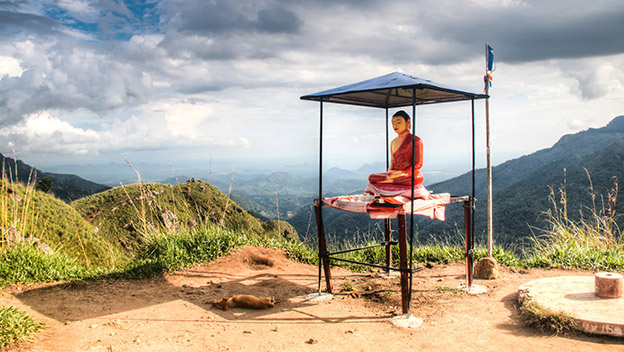
Buddha on Little Adam's Peak (Photo Credit: nicolasdecorte)
Ella: Little Adam’s Peak and Ella Rock
Highlights: Tea plantations, panoramic views, and the Nine Arches Bridge
Trail Length: Little Adam’s Peak (4.5 km round trip); Ella Rock (10 km round trip)
Difficulty: Easy to moderate
Ella, known for its tea plantations established in the 19th century, offers two main hiking trails. The first is Little Adam’s Peak, a 4.5 km round trip that starts from Ella town and takes about two hours. The trail passes through tea fields and offers views of the Ravana-Ella Gap and, on clear days, the southern coast. The second, more challenging trek is to Ella Rock. This 10 km round trip begins along the railway line before ascending through eucalyptus forests to a viewpoint with 360-degree views of the surrounding landscape. The best times to hike both trails are early morning or late afternoon to avoid the heat. A key landmark near Ella is the Nine Arches Bridge, an early 20th-century viaduct built without steel. Other local attractions include Ravana Falls, which is connected to the Ramayana epic, and the Ella Spice Garden. The town itself has numerous cafés and guesthouses.
The best time to walk: is from December to March when the weather is dry and the scenery is at its most vibrant.
Adam’s Peak (Sri Pada)
Highlights: Sacred pilgrimage site, sunrise views, and spiritual significance
Trail Length: 7 km (4 miles) one way
Difficulty: Moderate
Adam’s Peak, or Sri Pada, stands at 2,243 metres and is one of Sri Lanka’s most significant pilgrimage sites. The site holds importance for multiple religions: Buddhists believe the rock formation at the summit is Buddha's footprint, Hindus attribute it to Shiva, and Christians and Muslims consider it Adam's first step after Eden. The main pilgrimage season runs from December to May, peaking on full moon (Poya) days. The ascent is a 7 km trail consisting of over 5,000 steps, typically started around 2 am to reach the summit for sunrise. Hikers can expect to see a spectacular view and, on clear days, the peak’s triangular shadow cast upon the clouds. During the pilgrimage season, the path is well-lit and lined with tea stalls and shrines.
The best time to walk: is during the pilgrimage season (December to May) when the path is busy and facilities are open. Hiking from June to November is more challenging due to wet weather, fewer services, and a deserted trail. Warm clothing is essential as summit temperatures are cold before dawn. This trek offers both a physical challenge and a unique cultural experience.
Sinharaja Forest Reserve
Highlights: Biodiversity hotspot with rare birds and wildlife
Trail Length: Varies; guided walks required
Difficulty: Easy
Sinharaja Forest Reserve, a UNESCO World Heritage site, is Sri Lanka's largest lowland rainforest and a vital biodiversity hotspot. The forest is a premier destination for birdwatching, home to over 147 bird species, including 33 endemic ones like the Sri Lanka blue magpie and red-faced malkoha. A notable feature is the presence of mixed-species feeding flocks. The reserve also supports diverse mammals, such as the purple-faced leaf monkey and the elusive fishing cat. Its undergrowth is rich with unique reptiles, amphibians, and butterflies. Botanically, Sinharaja boasts a dense collection of flora, featuring ancient hardwood trees, towering dipterocarps, orchids, and various medicinal plants. Due to the dense vegetation and to enhance the experience, all trails require a trained guide.
The best time to walk: is during the drier months, from January to early April and again from August to September, when leeches are less of a bother and the forest is easier to explore.
Sigiriya and Pidurangala
Highlights: Ancient ruins, panoramic views, and historical significance
Trail Length: Sigiriya (1.5 km); Pidurangala (1 km)
Difficulty: Moderate
Sigiriya, an ancient rock fortress nearly 200 metres high, is one of Sri Lanka’s most significant archaeological sites. In the 5th century, King Kasyapa built his royal palace on its summit, complete with sophisticated water gardens and frescoes. The ascent involves climbing approximately 1,200 steps, passing the historic Mirror Wall and giant lion’s paw sculptures. The summit reveals palace ruins and offers panoramic views of the surrounding plains.
Nearby, Pidurangala Rock provides a less crowded alternative with a more challenging, rustic trail that includes some rock scrambling. It features a large reclining Buddha statue and the remains of a 5th-century monastery. The summit offers an exceptional view of Sigiriya itself.
Best time to walk: Both sites are best visited at dawn or late afternoon to avoid the midday heat and large crowds. The ideal months are during the dry seasons from January to April and August to September. An entrance fee is required for Sigiriya, while Pidurangala has a smaller fee that supports the local temple.
Yala National Park: Walking Safaris
Highlights: Diverse ecosystems and wildlife spotting
Trail Length: Designated walking areas
Difficulty: Easy
Yala National Park, Sri Lanka's leading wildlife sanctuary, consists of dry forests, coastal lagoons, and grasslands. While it's primarily known for game drives, specialist walking safaris are available in specific buffer zones. Led by experienced guides and naturalists, these walks provide a ground-level view of the park's biodiversity. During these walks, you can traverse habitats populated by sambar, spotted deer, sloth bears, and water buffalo. Yala has one of the world's highest leopard densities, though seeing them on foot is rare. The park is also a prime location for birdwatching, with species like bee-eaters, painted storks, and the crested serpent eagle. While elephant and crocodile sightings are common, guides ensure guest safety by interpreting animal signs and maintaining safe distances.
The best time to walk: for walking safaris is during the dry season, from February to July, as wildlife gathers around water sources. It is recommended to walk in the early morning or late afternoon when temperatures are cooler and animals are more active.
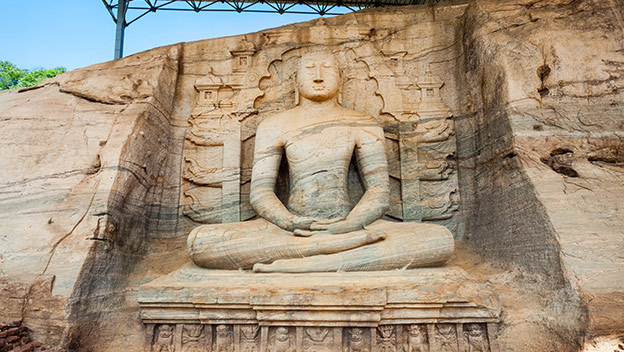
The Gal Vihara (Photo Credit: saiko3p)
Polonnaruwa: Ancient City Walks
Highlights: Well-preserved ruins and historical landmarks
Trail Length: Varies
Difficulty: Easy
Polonnaruwa, a UNESCO World Heritage site set beside the shimmering waters of the Parakrama Samudra reservoir, is a place where stories of kings and ancient kingdoms linger along every shaded avenue. Once the thriving medieval capital of Sri Lanka from the 11th to 13th centuries, Polonnaruwa boasts some of the island’s most striking archaeological riches. Begin your walk amid the gracious ruins of the Royal Palace of King Parakramabahu I, where the scale of the stone walls and audience halls hints at the kingdom’s former grandeur. Wander on to the Sacred Quadrangle; here, you’ll encounter exquisitely carved moonstones, lotus-studded pools, and the Vatadage—an elegant circular relic house encircled by ornate guardstones. The Gal Vihara, a collection of four grand Buddha statues masterfully hewn from a single granite boulder, is regarded as a crowning artistic achievement of Sinhalese stone sculpture.
The best time to walk: is in the early morning or late afternoon, when the soft light brings carvings and weathered stone to life and the heat is most forgiving.
Galle Fort
Highlights: Colonial architecture and coastal views
Trail Length: Varies
Difficulty: Easy
Galle Fort, a UNESCO World Heritage site on Sri Lanka's southern coast, is a living museum of colonial history. Originally built by the Portuguese in the 16th century and later fortified by the Dutch, its granite and coral ramparts enclose cobblestone streets lined with historic buildings. Key landmarks include the Old Gate with the Dutch East India Company insignia, the Dutch Reformed Church, and the historic Lighthouse, which offers panoramic ocean views. The fort is also home to numerous boutiques, galleries, and cafés. A walk along the ramparts provides glimpses of local life, including cricket games and kite flying.
Best time to walk: For the most comfortable experience and best light for photography, explore in the early morning or late afternoon to avoid the midday heat.
Safety & Logistics
The country is generally safe for travellers. Support vehicles are highly recommended for managing luggage transfers and steep ascents (as backup). For a seamless journey, Onlyluxe Travel provides group tours and private tours for a Sri Lanka Walking Holiday. With all logistics meticulously arranged, from your accommodations to your luggage transfers, you are free to immerse yourself in the pure joy of walking.
Best Places To Stay in Sri Lanka
Embark on a journey through Sri Lanka's most enchanting retreats, where luxury and nature intertwine. In Yala, discover the Wild Coast Tented Lodge, a unique encampment of cocoon-like suites where the untamed jungle meets a secluded beach. Journey to the heart of the Cultural Triangle and find solace at Uga Ulagalla, an eco-retreat offering private chalets on a 150-year-old estate near Anuradhapura and Sigiriya. Within the historic walls of Galle Fort, the stately Amangalla awaits, inviting you to step back in time with its serene, antique-filled suites and tranquil gardens. Or, escape to the misty hills of Ella and find refuge at 98 Acres Resort and Spa, a tranquil haven set amidst a lush tea estate with panoramic views of the breathtaking Ella Gap. Each destination offers a world of its own, promising an unforgettable Sri Lankan sojourn. To uncover more of the island's most exquisite five-star hotels, boutique hideaways, and unique stays, we invite you to explore more on our blog to the Best Places to Stay in Sri Lanka.
Best Routes & Itineraries
8-Day Sri Lanka Itinerary: Central Highlands, Plains & Southern Coast
Day 1: Colombo and Scenic Train Ride to Kandy
Arrive in Colombo and immerse yourself in the journey with a breathtaking train ride to the sacred city of Kandy. Settle into your hotel and anticipate the adventures that lie ahead in this cultural heartland.
Day 2-3: Central Highlands (Kandy - Nuwara Eliya)
Explore the royal city of Kandy, visiting the revered Temple of the Tooth Relic, before cycling through lush tea plantations. Ascend into the misty hills of Nuwara Eliya, the "Little England" of Sri Lanka, where colonial charm and verdant landscapes await.
Day 4-6: Yala & Horton Plains National Parks
Embark on an early morning trek through the ethereal landscapes of Horton Plains to witness the spectacular "World's End" viewpoint. Journey onward to Yala National Park for an unforgettable safari, seeking out leopards, elephants, and a dazzling array of wildlife in their natural habitat.
Day 7-8: Galle to Colombo
Discover the historic Galle Fort, a UNESCO World Heritage site where colonial architecture meets the turquoise sea, and explore its charming cobblestone streets. Conclude your journey with a scenic drive back to Colombo, carrying with you the timeless memories of Sri Lanka's wonders.
13-Day Sri Lanka Itinerary: Cultural Triangle, Central Highlands, Plains & Southern Coast
Day 1-2: Colombo
Your journey begins in the vibrant heart of Sri Lanka, Colombo, where you will be greeted and transferred to the luxurious Galle Face Hotel. Spend your first days immersed in the city's rich tapestry, exploring its colonial architecture and dynamic culture before indulging in a welcome dinner.
Day 3-6: Cultural Triangle (Sigiriya - Polonnaruwa - Kandy - Nuwara Eliya - Horton Plains National Park)
Embark on a captivating exploration of Sri Lanka's ancient history, beginning with the ascent of the majestic Sigiriya Rock Fortress and the discovery of Polonnaruwa's archaeological wonders. Your adventure continues to Kandy to visit the sacred Temple of the Tooth Relic, followed by the misty highlands of Nuwara Eliya and a trek to the stunning World's End at Horton Plains.
Day 7-9: Hike Tea Country
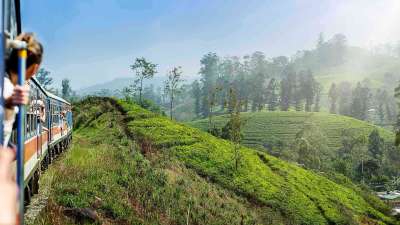
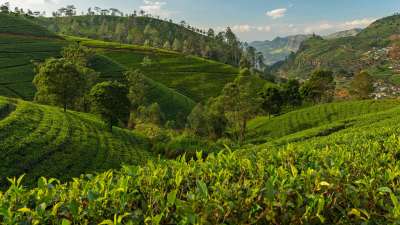
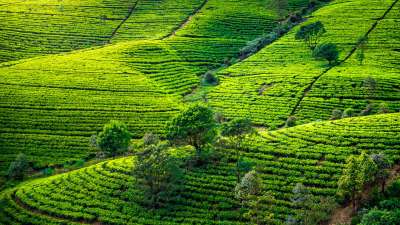
Immerse yourself in the verdant splendour of Sri Lanka's famed tea country with a stay at the luxurious Ceylon Tea Trails. Spend these days walking through lush plantations, learning the art of tea from leaf to cup, and soaking in the serene, rolling landscapes from the comfort of your colonial-era bungalow.
Day 10-11: Galle
Journey to the sun-kissed southern coast to discover the historic charm of Galle Fort, a UNESCO World Heritage site. Wander through its enchanting cobblestone streets, where colonial mansions, boutique shops, and art galleries create an atmosphere of timeless elegance against the backdrop of the glistening Indian Ocean.
Day 12-13: Colombo
Return to Colombo for a final, leisurely day, offering a chance for last-minute souvenir shopping or simply relaxing before your departure. Cherish the final moments of your Sri Lankan odyssey before being transferred to the airport, carrying with you memories of an unforgettable adventure.