At a Glance

Be one of the few to walk the legendary Druk Path from Paro to Thimphu on a brief yet unforgettable journey through Bhutan’s spellbinding landscapes. This classic guided trek weaves through the Himalayan splendor and Bhutan’s rich cultural tapestry, offering breathtaking vistas and the serenity of camping beside crystal-clear lakes. Marvel at Tibet's distant peaks and delve into Bhutan’s vibrant traditions. On special dates, gain the opportunity to experience the magic of colorful festivals, where masked dances and joyful celebrations bring Bhutanese culture to life.
Your adventure begins in Kathmandu, savoring the lively Thamel district before journeying to Paro. Marvel at the stunning Paro Valley, the grand Paro Dzong, and trek to Taktsang Monastery for breathtaking views. On Day4, begin your ultimate Druk Path trek, staying at full-service campsites as you ...
Trip Highlights
|
|
What's Included
- All meals as specified
- Travel by private minibus
- All transport and listed activities
- Tour leader throughout
- Arrival and departure transfers to/from Kathmandu Airport to hotel
- Bhutanese visa
- 11 nights accommodation on a twins share basis including 7 nights in comfortable hotels and 4 nights in full-service camping tents
Itinerary
 |
Welcome to Nepal’s gorgeous capital city, Kathmandu, also known as Kathmandu Metropolitan City. This city holds thousands of years of culture within every temple and monastery, an excellent starting point for our adventure. |
|
 |
Following our arrival at the Royal Singi Hotel, our luxurious night accommodation is in the heart of the city. Settle in and recover from the jet lag in your comfy room. Its location is close to tourist centres, market areas, and restaurants. A good place to begin your adventure is Thamel. It is a lively neighbourhood with bars, restaurants, casinos, cafes and shops selling unique souvenirs. The area is also famed for its nightlife and you can find out why. Note: The start hotel Royal Singi Hotel is approximately 10 minutes’ drive from the airport. The tour provides free arrival transfers to the start hotel from the airport for all customers. |
 Royal Singi Hotel, Kathmandu or similar
  None
None  |
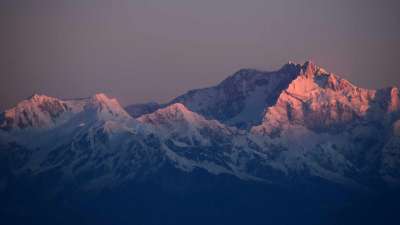
If the weather permits, we enjoy a scenic flight to Paro. You should get a breathtaking view (from the left-hand side of the plane) of much of the eastern half of the Himalayas, including Everest, Nuptse, Lhotse, Makalu, Kanchenjunga and Chomolhari (Jhomolhari). We transfer to our hotel once we finalise our visa formalities in Paro. The Paro Valley is famed as one of the most beautiful in Bhutan, with blue pine-decorated hills and lovely farmhouses among paddy fields - all overlooked by the massive Dzong (fort). Our plans for this afternoon include visiting Paro Dzong and the national museum above it. Park Dzong, one of the most impressive in Bhutan, is one of the finest examples of Bhutanese architecture. The inward-sloping walls form an imposing structure that towers over the town. Erected in the 17th century, it was one of the strongest and most important fortresses in Bhutan. It was used on many occasions to defend the Paro Valley from invasions by Tibet. The Dzong, which used to be the meeting hall for the national assembly, now houses a monastic school and district government offices. West of the Dzong is a covered wooden bridge known as Nyamal Zam, a restoration of the original bridge, which was washed away in a flood in 1969. At the hill’s summit, above the Dzong, is the old watchtower known locally as Ta Dzong. Built in 1656, it was renovated in 1968 by King Jigme Dorji Wangchuk to house the National Museum. Destroyed by the earthquake in 2011, the museum is now in a new building above the Ta Dzong. The museum features collections of masks and thangkas (Tibetan Buddhist paintings). |
|
 |
Arrive at our home for the next two nights, Rema Resorts. Rema Resorts, a quaint spa hotel, is situated in a serene location, offering heart-stopping views of the Paro River and majestic mountains, which you can enjoy from the terrace. Please note: The itinerary above could change subject to flight timings, which are generally unpredictable. |
Rema Resorts, Paro
Breakfast, Lunch, Dinner  |
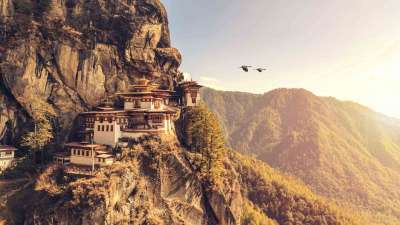
Level 4, Approx 12 km (7 miles), 4-6 hours walking, Elevation gain: 660m (2,165ft), Elevation loss: 660 m (2,165 ft) We begin the day with a warm-up hike to Taktsang Monastery. Also known as the Tiger’s Nest Monastery, it sits on the ledge of a cliff high above the Paro Valley. It was partially damaged by fire in 1998 and has now been restored to its former magnificence. We take a short drive from the hotel before hiking for about 1hr 30min to a viewpoint for classic vistas of the monastic buildings that embrace the cliff wall opposite. Still feeling energetic? Trek another 45 minutes to the actual monastery. The walk is good for familiarisation, and we recommend wearing trekking boots. Please note there are about 100 steps up and down. Returning to the hotel, we have the afternoon to explore Paro town. |
|
 |
Paro is overflowing with rich culture and history; there’s so much to do. You can explore its iconic monasteries and dzongs, stroll along the Paro Chhu River, take a cooking class, or watch a game of traditional archery. Your guides will be happy to give recommendations. |
Rema Resorts, Paro or similar
Breakfast, Lunch, Dinner |
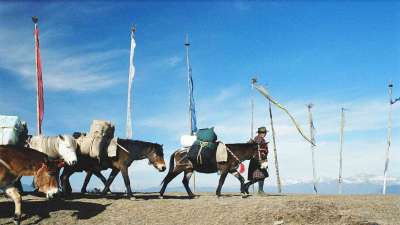
Level 3, Approx 7 km (4 miles), 3-5 hours walking, Elevation gain: 954 m (3,130 ft), Elevation loss: 70 m (230 ft) Today marks the beginning of our epic trek. After a hearty breakfast, we embark on a short drive to a height of about 2,620 meters (8,595 feet), just above the ancient Ta Dzong watchtower. Though the trek itself is not long in hours, it ascends steadily, gaining a fair amount of altitude. We set off with a gentle climb that leads us to a prayer wall within about 1 hour and 30 minutes, tracing a steep track. The trail then tightens, guiding us through a rugged, rocky path that steepens slightly as it winds through the forest. |
|
 |
Our lunch is enjoyed in a tranquil clearing, an hour further along our journey. In the afternoon, we continue for roughly an hour until reaching Jele La (3,550 meters/11,645 feet), where our camp is set just below the pass and the crumbling Jele Dzong. If the weather graces us with clarity, the panoramic view of the Paro Valley unfolds below. For those with a bit more stamina, there’s an option to trek further up the ridge from Jele La to a dilapidated hut that houses a small Bon shrine, adding a touch of mystique to our adventure. |
Full-service camping (sleeping altitude: 3,530m/11,580ft)
Breakfast, Lunch, Dinner  |
Level 3, Approx 12 km (7 miles), 3-5 hours walking, Elevation gain: 680m (2,231ft), Elevation loss: 295 m (968 ft) Following a wholesome breakfast, we take a short walk back to the main trail and climb for about 30 minutes to Jele Dzong. If it is accessible, we go inside the 14th-century Dzong. We keep going up the ridge for a short way—we can see the Paro Valley way below, and if the weather is clear, we may even spot the peak of Chomolhari in the distance. We navigate the winding trail through thick rhododendron forests as we keep our eyes peeled for colourful monal and blood pheasants. Lunch is in a forest clearing, and afterwards, we go on a short trek to our camp at Rawna. Please note: If other trekking groups are around, we may have to camp at Jangchu Lakha (3,700m/12,140ft) or Tsokam (3,750m/12,300ft). The three campsites are close by, each in different forest clearings. |
Full-service camping (sleeping altitude: 3,860m/12,665ft)
Breakfast, Lunch, Dinner  |
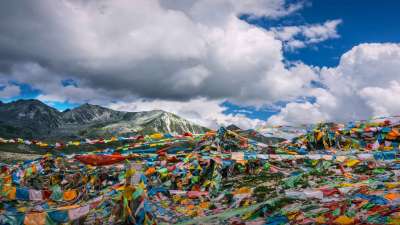
Level 5, Approx 10km (6 miles), 5-7+ hours walking, Elevation gain: 628m (2,060ft), Elevation loss: 622 m (2,041 ft) You may need to prepare yourself for today as it will be a long day and probably the most tedious walk of the trek. We walk steeply from the camp on a narrow trail for about an hour to reconnect to the main trail. We keep climbing through a jagged landscape decorated with small rhododendron bushes. We arrive at a col at 4,073 m (13,367ft) marked with prayer flags and then drop down a short way to a cave. The trail then ascends again quite steeply to a ridge at 4,080m (13,385ft), where we get breathtaking mountain panoramas on a clear day, including Chomolhari and Jichudrake. We eat lunch on the ridge to go with the lovely views we feast our sights on before travelling a little further up the ridge to 1,120 m (13,520 ft). From here, we move around a little and then drop on a rocky trail to the shores of Jimi Lang Tscho, famed for its trout. |
Full-service camping (sleeping altitude: 3,885m/12,746ft)
Breakfast, Lunch, Dinner  |
Level 5, Approx 9 km (6 miles), 5-7 hours walking, Elevation gain: 708 m (2,323ft) We embark on another long but fulfilling walk with good mountain vistas. The trail extends from camp along a jagged trail up to Janye Tscho Lake. Hiking even higher to a col at 4,150 m (13,614 ft), we take a short descent to Simthokha Lake, 4,090 m (13,420 ft), the highest lake on our trek. From here, the trail winds to our camp at Labana. |
Full-service camping (sleeping altitude: 4,100m/13,450ft)
Breakfast, Lunch, Dinner  |
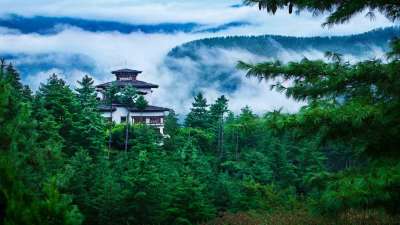
Level 4, Approx 11 km (7 miles), 4-6 hours walking, Elevation gain: 235m (771ft) The trail leads us up the Labana Pass, the highest altitude of this trek at 4,235m (13,895ft). The views get more attractive, and on a clear day, we can see Gangar Punsum, Table Mountain, and much of the Bhutan Himalaya—way below is the Thimphu Valley. From the summit, we traverse the hillside with stunning mountain views and descend towards Thimphu. There are several small climbs to cols, but the general direction is downhill. From the Phajoding Labsa chorten (shrine), we go down even further to Phajoding Monastery for lunch. There are several temples here, and a monastic school, and it is visited by many Bhutanese. We descend even further through forests of blue pine to the end of our trek at the Motithang, just above Thimphu, the capital of Bhutan. We should arrive at Hotel Pedling by mid-afternoon, a simple and comfortable hotel and spa located in the vibrant parts of Thimphu. You are assured a rejuvenating session in the spa and quick access to exciting activities due to its location. |
Hotel Pedling, Thimphu or similar
Breakfast, Lunch, Dinner  |
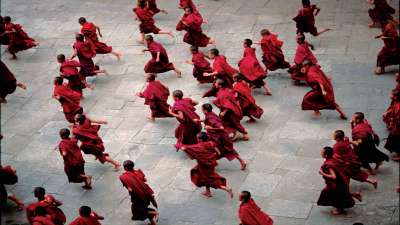
We use the day to visit the most important sites in and around Thimphu, including the Memorial Chorten (built in 1974 to honour the memory of the third king, Jigme Dorji Wangchuk) and Buddha Point (a large Buddha statue on the hillside towering Thimphu). There are many museums in Thimphu and an art school—the post office and marketing are also interesting places to visit. Your leader’s goal is to show you as much as possible in the time available depending on opening times. In the late afternoon, we drive to Paro (a one-hour drive). Alternative itinerary for festival departures: Thimphu/Dechenphu Tshechu Festival - September & October 2024 and October & November 2025. We spend the day witnessing one of the most lively festivals in Bhutan. During the festivals, the Bhutanese gather to see the monks and lay dancers dressed in vibrant brocade and silk costumes, donning painted masks, reenacting the stories of the religious and lay history of Bhutan through music and dance. There are masked dances, prayer meetings, and a carnival atmosphere for a few days as many villagers arrive to meet old friends. The Bhutanese all put on their finest national dress for the festival, and one of the highlights is the magnificently colourful silks on display. Compared to Dechenphu Tshechu, which is much smaller, Paro and Thimphu are the most famous festivals in Bhutan. |
Rema Resorts, Paro or similar
Breakfast, Lunch, Dinner  |
We begin the day by visiting Kyichu Lhakhang. It was built in the seventh century and is said to be the oldest temple in Bhutan; it holds great spiritual significance to the country. Legend says it was erected on the foot of an ogre by a king in one night. Following this, we continue to explore the city and neighbouring areas. Alternative itinerary for festival departures: Paro Festival - 14 March 2024 & 02 April 2025 See day 9 for description. |
Rema Resorts, Paro
Breakfast, Lunch, Dinner  |
We start today with a flight back to Kathmandu. You have the rest of the day to traverse the temples and markets of the Nepalese capital or go shopping. Several sightseeing tours are available (you may inquire about them from our representative in Kathmandu). |
|
|
You may also check out the monkey temple at Swayambhunath, the largest Hindu temple in Nepal at Pashupatinath, or one of the largest Buddhist stupas in Asia at Boudhanath. Once you’ve had your fill of culture, the vibrant markets of Thamel are great for souvenir hunting. |
Royal Singi Hotel, Kathmandu or similar
Breakfast  |
Our amazing trip comes to an end in Kathmandu after breakfast. If you’d like more time to explore, you should speak to your sales representative about extending your stay. Sometimes, we have to change the sightseeing times around due to opening times, holidays or festivals. We endeavour to show you all the sights available at the time. If it is impossible to visit any of the sights described in the notes above, an alternative will be provided. NOTE: This itinerary is provided as an example only – prevailing conditions and local arrangements may cause variation. |
None
Breakfast Dates & Prices
Please contact us for private departures and group bookings. Single Supplement is available on request.
More Info
- The departure and finish point is Kathmandu
- Major commercial flights provide convenient access to Kathmandu. The closest airport to Kathmandu is Tribhuvan International Airport (KTM). It’s located about 5 kilometers (3 miles) from the city center and is the primary international gateway to Nepal.
Himalayan views tend to be best between October to December, as the weather is generally clear with sunny skies. From March to May, the valleys are awash with colour when the rhododendrons bloom (particularly in May). You will experience a range of temperatures during the trip depending on the altitude. During the day, temperatures are approximately 10C-20C (50F-68F). At night, temperatures drop in autumn to about 3C-4C (37F-39F). Although these departures do not fall inside the normal monsoon season, there is always a chance of rain in Bhutan and you should be prepared for this. The trails become very muddy if it rains on trek. There can sometimes be snowfall at the higher altitudes especially in spring.
The walking level on this trip is rated Level 4 Moderate & Challenging.
Level 1 Leisurely: Experience is not necessary; anyone fit and healthy enough to complete a weekend walk will thrive. Walks are often optional. Trails are seldom flat, so expect a reasonable number of ascents and descents. You normally walk for two to five hours per day; daily ascents will likely be around 985ft to 1,640ft (300m to 500m), perhaps with the odd day around 1,970ft (600m).
Level 3 Moderate: Expect easy, medium-length walks or harder, shorter walks. Some experience is useful, but not essential. Good health and reasonable fitness are important. There will be walks at higher altitudes and some longer, harder days. Generally, though, the underfoot conditions will be fair. A walking day is normally five to seven hours; daily ascents will likely be around 1,640ft to 2,625ft (500m to 800m), perhaps with the odd day around 2,955ft to 3,280ft (900m to 1,000m).
Level 5 Challenging: Fitness is vital with extended walking in mountainous terrain. You might also experience high altitude, challenging climates and remote locations. Trekking experience is desirable, but not vital if you are confident in your physical condition. Walking days are usually between six and eight hours, although they may be longer for passes or peaks. Daily ascents can be around 2,955ft to 3,280ft (900m to 1,000m), perhaps with the odd day around 3,610ft to 3,940ft (1,100m to 1,200m).
Level 7 Tough: Trekking experience is essential and preferably at altitude. You need complete confidence in your ability to trek for many days over difficult terrain. You may encounter extreme altitude and weather conditions and may need to use ice axes and crampons. Stamina is essential as walking days last six to nine hours (sometimes more on occasions). Daily ascents will likely be around 2,955ft to 3,280ft (900m to 1,000m), perhaps with the odd day around 3,610ft to 3,940ft (1,100m to 1,200m).
Split and optional grades: Where a trip falls between two grades, an intermediate or ‘split’ grade is used. For example, Level 2 (Leisurely/Moderate). Occasionally there are optional ascents available; in this case, the grade will be highlighted.
Below is a suggestion of what you might find useful on this trip. Please note, many Bhutanese are still traditional in the way they dress. You should dress conservatively so as not to offend local sensibilities; short shorts, vests, leggings and other tight-fitting clothing is not appropriate. When visiting dzongs, you must cover your legs and arms and men must have a long-sleeved shirt or T-shirt with a collar. Please note shawls are not acceptable for men or women. You can carry a set of dzong clothes on the bus and change before you enter a dzong. T-shirts are preferable to sleeveless tops. Although shorts are acceptable for trekking, they should reach to just above the knee. For women, a long skirt or trousers are preferable.
Bhutanese dress in their finest clothes for the festivals. If you are travelling on a festival departure, we request you bring a set of smart clothes. For men, trousers and a shirt with a collar and long sleeves are appropriate; for women, a long skirt and long-sleeved top. Shoes or smart trainers (sneakers) or sandals are fine for footwear.
You are restricted to 26lb (12kg) of luggage on trek. You can leave luggage you do not require for the trek in the hotel in Paro to collect on your return. Any luggage left in Paro is transferred to the hotel in Thimpu for you (where applicable).
- Four-season sleeping bag
- Three/four-season jacket
- Waterproof walking boots (worn in)
- Waterproof jacket and trousers (pants)
- Gaiters
- Trekking pole(s)
- Comfortable shoes for the evening
- Warm hat and gloves
- Several pairs of walking socks
- Tracksuit/thermal underwear
- Warm mid-layer (fleece)
- Lightweight trousers (pants)
- Base layers/T-shirts/shirts
- Long shorts or skirt for women
- Sunhat, sunglasses, sunscreen and lip salve with sun protection
- Mosquito repellent (please refer to advice on avoiding Dengue fever in vaccination section)
- Backpack for the day
- Headtorch (head lamp)
- Refillable water bottle/Water bladder (Camelbak)
- Towel
- Dry bags to line backpack and for packing clothing in the kitbag
- Toilet paper
- Hand-washing gel
- Biodegradable soap/shampoo
- Small personal first-aid kit
- Water included
Plastic bottles are a big issue in many countries where recycling isn’t yet widely available; they often end up in landfill or get burned. Both processes are harmful to the environment and we would like to reduce our impact here. For your trip, we provide an alternative to single-use plastic bottles to reduce the plastic used. This means that safe drinking water will be available throughout; all you need to do is bring a bottle to refill along the way. Please add this to your packing list.
Bhutan
You will need a visa for Bhutan, which we will organise for you. The cost of the visa (US$40) is included in the price of the trip. We need it to organise your Bhutan visa in advance to do this, you will need to send us a clear colour copy of your passport at point of booking. You also need to provide a good coloured passport photo, with white background (and ensure you are not wearing any glasses). Please make sure we have the passport copy and separate passport photo no later than eight weeks before departure. It can either be sent by post or scanned; both should be very clear and in colour. If you need to get a new passport for the journey, please apply for this immediately, and send us the copy/scan as soon as you receive your new passport. It is vital the information you give us is 100 percent correct, and that the passport copy you send us is the one on which you will be travelling to Bhutan.
Visa regulations can change without notice: please check the current regulations in good time to obtain a visa if one is required.
Nepal
You can obtain your visa in advance or on arrival. The Immigration Department of Nepal has suspended visas on arrival for certain nationalities – please check if this applies to you with your nearest embassy or consulate.
Onlyluxe Travel acts as travel agency and work with different tour operators.
Payment Detail
All pricing is in Australian dollars and are quoted on a per person twin share basis. A supplementary price is available (see below). Bookings are not confirmed until full payment and the signed Booking Form has been received by Onlyluxe Travel.
A non-refundable 30% deposit is payable within 7 days of your booking, with the final balance due 100 days prior to departure. If a booking is made 100 days or less before departure, the full payment is payable immediately. Last minute bookings are payable before arrival. Failure to pay on time may result in automatic cancellation of a booking with cancellation penalties payable to Onlyluxe Travel. If you pay by credit card or PayPal a surcharge will be added to the total price.
Single Supplement
All accommodation is twin share. Single guests will share with someone of the same gender. If a single room is demanded, a supplementary price of will apply. The supplementary price refers to our quotation and needs to be stipulated at the time of booking.
General Cancellation Policies
- Outside of 100 days monies will be refunded less 30% of full fee
- Within 100 days prior to arrival all monies will be forfeited
- No refunds will be given in the event of non-arrival, any unused services or unused nights due to flight or weather disruption
- We strongly recommend guests protect themselves with travel insurance and medical insurance
Please Note: Cancellations must be advised in email and will take effect from the date they are received.
Liability
The participant agrees to indemnify Onlyluxe Travel, and its servant, tour operator and agents, in relation to any liability, loss and damage which the tour operator, or its servants and/or agents may incur as a result of the participants, negligence or misconduct during the tour.
Smoking is not permitted on the bus, or in tents or in other accommodation being used by tour operator at the time that a trip is being conducted.
Child Policy
Please consult travel consultant on age limit.
Changes to Itineraries
Local conditions may necessitate changes to sightseeing, walking and driving routes, camping and accommodation locations. While every effort will be made to provide the services and experiences as offered in our brochure, on our website, and in our trip letters, we reserve the right to vary your itinerary. In the event that we are forced to change your arrangements, substitute arrangements of a similar standard will be provided. The tour operator will not be liable where interruptions to itineraries are caused by weather conditions, technical problems to transport used by the tour operator, industrial action, political or civil commotion or other circumstances beyond our control. We refer you to the conditions regarding travel insurance.
Changes in Prices
While we will do its utmost to honour its pricing unforeseen circumstances may mean that prices may be subject to change without notice.
Pre-Existing Medical Conditions and Age Limits
You need to advise Onlyluxe travel and the tour operator on any pre-existing medical condition, mobility impairment and/or disability that might reasonably be expected to increase the risk of your requiring medical attention, or that might affect the normal conduct of a trip and the enjoyment of other trip members. Onlyluxe Travel and the tour operator may require an assessment of your medical condition from a qualified medical practitioner. If you fail to adequately notify the tour operator of any pre-existing medical conditions and/or disability, the tour operator reserves the right, at its reasonable discretion, to cancel your participation in a trip at any time, including after the commencement of your trip, with no right of refund if your medical condition, mobility impairment and/or disability could be reasonably expected to affect the normal conduct of the trip and the enjoyment of other trip members.
Cancellation by The Tour Operator
The tour operator is at the mercy of nature in all her beauty and all her fury. The tour operator will under no circumstance knowingly place at risk the health and well-being of our guests and guides. In the case of natural threats, acts of God and the like (e.g. bushfires, impassable snow, etc) the tour operator may need to cancel a tour with very little notice. In some cases, this can occur after the tour has commenced. The tour operator reserves the right to cancel any tour up to 60 days prior to departure if the minimum number requirement is unable to meet for a tour. If the tour operator needs to cancel for any reason, the cost of the tour or any other costs associated with travel to the designated pick up point, overnight accommodation, meals, etc will not be covered by the Onlyluxe Travel and therefore we strongly recommend travel insurance be taken out prior to travel.
Force Majeure
'Force Majeure' means (without restriction) any event which Onlyluxe Travel or its third party providers could not, even with due care, foresee or avoid. Force Majeure covers events such as, but not limited to, adverse weather conditions, fire and all similar events beyond our control. In the case of Force Majeure Onlyluxe Travel will not accept liability, and reserves the right to change and cancel trips.
Evacuations
In rare circumstances, due to injury or unforeseen illness, the tour operator may need to evacuate you from a remote part of the walk. Helicopter evacuations are expensive and in most cases will be at a cost to the customer.
For Australian residents, under the Australian Government Medicare Act, it is prohibited for any domestic travel insurance product to provide any financial reimbursement with regard to ambulance or air ambulance services. We therefore strongly advise our customers to take specific ambulance cover through their health insurance provider. Evacuation cost will not be covered by the Onlyluxe Travel and therefore it is also strongly recommended that our customers take out travel insurance to cover (amongst other things) the costs associated with evacuation.
Travel Insurance
In view of the heavy cancellation penalties applied to cancelled reservations in certain circumstances, we strongly recommends suitable travel insurance be purchased at the time the holding deposit is paid. We recommend insurance cover that covers any loss which may be suffered due to cancellation. We also strongly recommend comprehensive travel insurance against loss of baggage and medical expenses.