
When summer blankets Hokkaido, this northern island wakes up as a wonderland for explorers. An explorer's fantasy is created from endless vistas of unspoiled nature, pure lakes cradled by ancient volcanoes, and the deep culture of the Indigenous Ainu people. Think quietly, as you traverse woods bursting with life, wandering atop calderas shaped by millennia of volcanic wrath, and losing yourself in cultural traditions as old as the region itself. Every road in Hokkaido tells a tale, and every vista is a masterwork.


Best Time to Hike:
The best time for a Hokkaido waljong holiday is June to September. May and June are popular months for wildflower season, however during this time trails and tourist services tend to get busy. Late summer through early autumn offers quieter conditions, comfortable hiking weather, and easier logistics due to fewer crowds. By September and October, the autumn colours begin to appear, with leaves turning yellow, orange, and red across the landscape.
Safety & Logistics
For a seamless journey, Onlyluxe Travel provides group tours and private tours. With all logistics meticulously arranged, from your accommodations to your luggage transfers, you are free to immerse yourself in the pure joy of hiking and walking.
Best Summer Hikes in Hokkaido
1. Lake Akan Guided Walking Tour Led by Ainu guides
Begin at the Ainu Theater Ikoro, a traditional Ainu village just 10 minutes from Lake Akan. With sights set on exploring the surrounding forests and lakes, Lake Akan—a serene crater lake nestled in Akan Mashu National Park—embodies the essence of this walk. This park is home to the rare marimo algae which can grow to the size of a soccer ball over centuries, if left unchecked—a tastamnet to the lake’s pristine environment.
On its course, Ainu guides—descendants of Hokkaido's Indigenous people— accompany you, telling tales of kamuy (spiritual entities), sacred rites, and ancient melodies. You will also learn some local crafts, which the indigenous Ainu people are always ready to share with you. The surrounding landscape is equally exciting, with emerald green waters and cedar woods enriching this 2-hour trek.


Photo credit: Onlyluxe Travel
2. Brown Bear Trekking at Shiretoko Five Lakes
The untamed heartbeats of Hokkaido are fiercest in Shiretoko National Park, a UNESCO World Heritage Site noted for its unspoiled splendour. At its core are the Shiretoko Five Lakes, a breathtaking location encircled by the spectacular Shiretoko mountain range, calm waterways, and deep woods.
You will stroll slowly across the 3-kilometre elevated boardwalk of the park under the direction of a trained ranger. The ranger will assist you in spotting indicators of the most elusive park inhabitant, the brown bear, throughout the trip. Their keen eyes and great knowledge make the trip memorable, from footprints and claw markings to the possibility of a far-off glance.
As you walk, the peaceful path winds across dense forest, sometimes revealing glistening lake vistas. Birdsong or the gentle rustle of leaves breaks the silence now and sometimes, enveloping you in the unspoiled environment of this remarkable location.


Photo credit: Onlyluxe Travel
3. Lake Mashu Walk and Mount Mashudake Summit
Setting off at Observation Deck 1, perched on the northeastern edge of Lake Mashu’s caldera rim in Hokkaido’s Akan-Mashu National Park, this trail winds its way around the lake before reaching its western flank, where the volcanic peak of Mount Mashudake towers above.
One way, this around 7-kilometre path takes 2.5 to 3 hours and progressively moves from the thick woodland to windswept meadows. As you ascend higher, these vast vistas softly swinging in the breeze provide a great feeling of freedom. The true highlight awaits at the summit of Mount Mashudake.
There, you will be met with an amazing sight: the mirror-like surface of Lake Mashu reflecting the heavens, sheltered by rocky cliffs. Beyond the lake, the great wilderness of Akan National Park opens out a stunning mosaic of snow-capped mountains, rich woods, and peaceful, sparkling lakes.


Photo credit: Onlyluxe Travel
4. Mt. Usu Outer Rim Trail
Enjoy ride on the Usuzan Ropeway to Mount Usu's summit, where a 4.8-kilometer out-and-back trail (taking around 1.5 to 2 hours to complete) provides a window into Hokkaido's volcanic past. Ash-covered paths, smoking craters, and tough terrain moulded by prior eruptions highlight this hike.
At the upper station, an observation deck provides panoramic views of Lake Toya and the nearby Showa Shinzan, a 20th-century volcano that recently emerged. From the summit, follow the trail to a second observation deck, where views of the ocean and Mout Usu’s largest crater astound. Each step you take along this path reveals the serene beauty of Lake Toya as it contrasts with the rugged volcanic landscape, while views of the Pacific Ocean highlight the natural forces that shaped this remarkable area.


Photo credit: Noboribetsu International Tourism
5. Kuttara Volcano & Lake Hike
The Kuttara Volcano trek provides a special chance to discover a geothermal paradise. This almost 2-kilometre path, starting from the Kuttara Onsen area, leads you across an otherworldly terrain moulded by volcanic activity.
As you walk this route, you will see firsthand the raw force of nature. The ground under your feet seems to breathe, spewing steam from fumaroles and smelling strongly of sulphur. Boiling hot springs with their blue and green waters dot the landscape, offering a glimpse into the earth’s fiery heart.
The highlight of the trail is Kuttara Lake, one of the clearest lakes in Japan. This serene body of water mirrors the sky above, creating a breathtaking reflection that makes it a popular spot.


Photo credit: Atsushi Tsubokura
6. Mt. Asahidake Climb
Standing at a majestic 2,291 metres, Mount Asahidake reigns as the highest peak in Hokkaido, its towering presence anchoring the wild heart of Daisetsuzan National Park. This walk begins at the Asahidake Ropeway station, where a brief gondola ride will take you to the trailhead, laying the groundwork for an unbelievable trip. Climbers are offered more than simply a climb along the 7.6-kilometer track, which winds its way through difficult terrain and alpine meadows. As you ascend, panoramic vistas unfold—jagged peaks, vast forests, and valleys carved by glacial streams that shimmer like silver veins.
At various points along the route, delicately coloured alpine wildflowers, such as the uncommon kibanakikyo (yellow bellflower), soften the harsh scenery by painting it with their brilliant hues.


7. Nakajima Island Nature Walk
The island of Nakajima is home to one of Japan's most active volcanic regions, the Toya Caldera, making its 8.4-kilometer loop trail an extraordinary adventure.
Starting at the Lake Toya Ferry Terminal, the path slithers through forests, with tall trees creating a canopy where drappled sunlight sieves through to the woodland floor. You may find wildlife activity on this walk—squirrels, brightly-hued aviaries and occasionally, deers— and as you ascend, the crisp air and earthly scent of pine and moss envelop. Be sure to pause at one of the scenic spots to gaze back towards the mainland, where Mount Usu and its dramatic craters dominate the landscape.


8. Mt. Muroran Loop Hike
Starting from the Muroran Skyline, this fulfilling 5-kilometre loop hike takes you to the 911-metre-high Mount Muroran, with breathtaking views of the industrial city of Muroran and the wide Pacific Ocean. The path winds along the beach as you climb, past rocky outcroppings and secluded bays with glistening clean waves.
On clear days, you might be able to spot Mount Yotei in the distance, its symmetrical peak resembling Mount Fuji. At the summit, the panoramic vistas of the rugged cliffs meeting the ocean are truly spectacular, with the Pacific stretching out to the horizon. The descent offers a lasting memory of this dramatic landscape.


9. Mount Orofure Ascent
Climbing the active volcano Mount Orofure (1,230 m) is a test of your mettle that will not disappoint. Starting from the Orofure Onsen area, this 9-kilometre trail takes approximately 4 to 5 hours to complete. Along the way, the path unveils amazing natural sculptures, such as jagged rock formations towering over the volcano, frozen lava flows, and steam vents hissing and whispering about the volcano's core.
As you ascend, the landscape changes from rich woodlands to barren volcanic ground, offering a striking contrast to the energetic lowlands below. The summit, however, rewards you with something truly spectacular: a breathtaking panoramic view of the island, with verdant valleys stretching out beneath distant, snow-capped peaks. Keep your eyes peeled along the trail, as sightings of red foxes, the rare Hokkaido brown bear, and various bird species, like the Japanese bush warbler and rock ptarmigan, are possible.


Photo credit: Noboribetsu International Tourism
10. Hell Valley History Walk
Hell Valley, or Jigokudani, presents a remarkable view of Hokkaido's geothermal activity. Starting from the Noboribetsu Onsen Visitor Center, this 2-kilometre walk, taking approximately 1 to 1.5 hours, immerses you in a surreal landscape of natural wonders. Highlights include steaming rivers, vibrant fumaroles, bubbling mud pools, and striking sulfuric vents that hiss and release earthy, mineral-rich aromas. The trail also features wooden boardwalks and observation points, offering safe yet thrilling vantage spots to marvel at the dramatic terrain.
As you progress, the geothermal field reveals itself as the lifeblood of Noboribetsu Onsen’s famous hot springs, integral to Japanese culture and history. At each turn, the otherworldly sights and sounds—rising steam, the gurgle of boiling waters, and the occasional tremor—evoke the raw, untamed power of nature.


11. Hike Among Flowers: Rebun Island
Often referred to as the northernmost flower island in Japan, Rebun becomes a living masterwork every summer. Fields of rebun atsumorisou (the rare lady's slipper orchid) and ezonohatsuyukiso (Ezo edelweiss) coat their undulating slopes to create an always shifting tapestry.
Trails here range in difficulty; the Rebun Eight- Hour Course, which offers a demanding 18-kilometre walk with breathtaking sea vistas and varied wildflowers, is ideal for experienced hikers. The Momoiwa Observation Course on the other hand offers a pleasing 4-hour climb with expansive views and vivid blossoms. The shorter, leisurely Cape Sukoton Trail, which has alpine flora and orchids against amazing views of the Sea of Okhotsk, is perfectly suited for beginners. Every stride on this island smells like fresh flowers, making this a floral paradise ideal for those who desire great photo opportunities.


Photo credit: Onlyluxe Travel
12. Walk in the Toya-Usu UNESCO Global Geopark: Nishiyama Foot Route
Enter the eerie past of Mount Usu's 2000 eruption on the Nishiyama Foot Route, a 2.6-kilometer route that winds across the devastated remains of a once-bustling residential neighbourhood. Under the direction of a qualified guide, this 46-minute walk follows the Former National Route 230, where devastated homes, a former kindergarten, a fire station, and even a sweets factory stand serve as moving reminders of the force of the eruption.
The most amazing narrative is that of the Toyako Kindergarten that was destroyed—abandoned soon following the school holidays—ensuring no deaths. Along with providing an opportunity to see the unvarnished aftermath of a natural disaster, this walk lets one consider the resiliency of the nearby population. This emotional journey emphasises the need to coexist peacefully with the erratic terrain of Hokkaido.
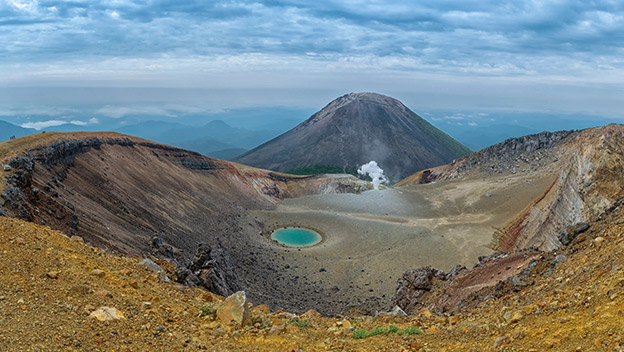

Top of the mount Meakan, Photo Credit: Martin Capek
13. Mount Meakan Loop Hike
Mount Meakan is an active volcano nestled within Akan Mashu National Park, southwest of Lake Akan. Standing as one of Japan's more active volcanoes, it offers some of the most spectacular volcanic landscapes in the country.
Hiking is available from May to early October, with a circular trail starting and ending at Meakan Onsen being the most popular route, taking around 4-5 hours to complete. The ascent is steep but requires no special equipment beyond sturdy hiking shoes.completing their tour.
The trail winds through a Sakhalin spruce forest before opening up to sweeping views of the azure Lake Onneto and the Daisetsuzan mountain range. From the summit, you can see active peaks to the north and south, while the descent towards Mount Akan-Fuji passes through meadows carpeted with alpine flora in summer. Given Meakan's history of eruptions, hiking trails may close during periods of heightened volcanic activity. After your hike, unwind at Nonaka Onsen, a charming ryokan at Meakan Onsen that opens its highly sulfuric baths to non-staying visitors — a perfect way to end your adventure.
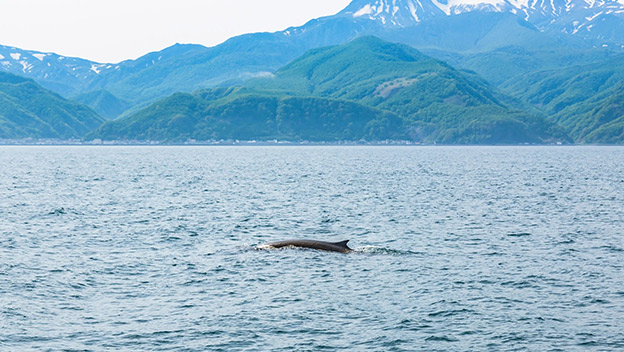

Wild Fin whale at Shiretoko, Photo Credit: Takashi Images
14. The New Hokkaido East Trail
Opened in October 2024, the Hokkaido East Trail is a 410-kilometer long-distance hiking route that winds through some of Japan's most breathtaking landscapes. Travelling from south to north, the trail passes through marshlands, dairy farmlands, dense forests, a volcanic caldera, and rugged coastal terrain.
The trail spans three national parks, each with its own distinct character. Kushiro Shitsugen National Park, home to Japan's largest marsh and rich in Ainu cultural heritage, anchors the southern end. At its heart lies Akan-Mashu National Park, where volcanic calderas and pristine lakes create a dramatic alpine landscape. The trail concludes at the Shiretoko Peninsula, a UNESCO World Natural Heritage site celebrated for its rare interaction of land and marine ecosystems, and home to brown bears, sea lions, and sperm whales.
Beyond its scenery, the trail offers hikers a glimpse into local life, passing through small communities, farms, and fishing villages, with the important fishing port of Rausu marking the northern trailhead. Accommodation options include hotels, inns, and family-run minshuku, with some campgrounds available. Section hiking is possible, though public transport is limited and schedules should be checked in advance.


Photo Credit: makieni
15. Kogen Numa Trail: The Home of Brown Bears
Nestled at 1,230 metres above sea level in the remote north-eastern corner of Daisetsuzan National Park, the Kogen Numa Trail is one of Hokkaido's most extraordinary hiking experiences. This untouched wilderness is home to Hokkaido's iconic Brown Bears, which are frequently spotted by hikers during summer. The trail offers three levels of difficulty, catering to beginners, intermediate, and experienced hikers, with the full loop featuring a challenging stream descent best suited to seasoned adventurers.
The trail operates strictly between 07:00 and 15:00, with entry permitted until 13:00, and must be walked clockwise. Access is through the Bear Information Center, where a mandatory 10-minute bear safety talk is provided in both Japanese and English. Along the route, hikers can expect to encounter over a dozen stunning alpine ponds, dramatic escarpments, and breathtaking autumn foliage in late September.
The trail is open from early June to mid-October. The trailhead is located at Daisetsu Kogen Onsen, accessible only by car with free parking available. During peak autumn foliage season, the access road closes and a shuttle bus operates from Daisetsu Lake Camp Site.
Where Memories Outlast the Miles—Hokkaido
The summer treks in Hokkaido are about the tales, experiences, and relationships created along the path rather than only the locations. Every path invites you to see, feel, and recall the wild beauty of this remarkable island long after you have left its coastlines.
Discover Hokkaido Holidays Here


