At a Glance
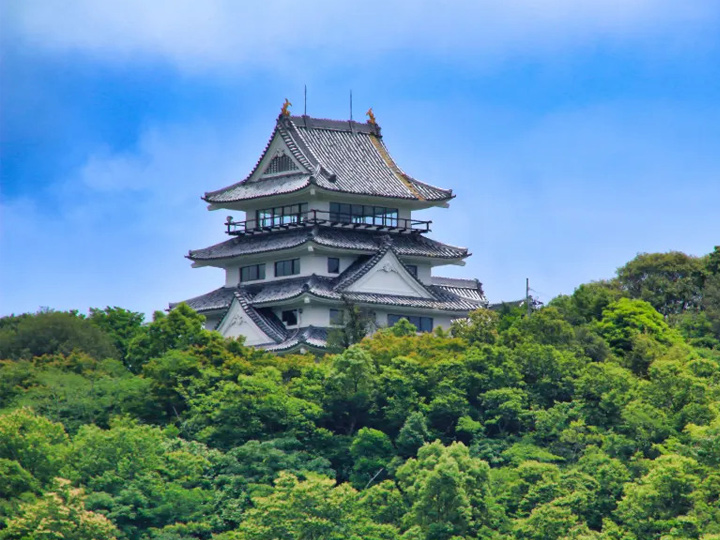
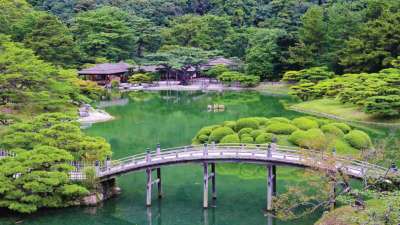
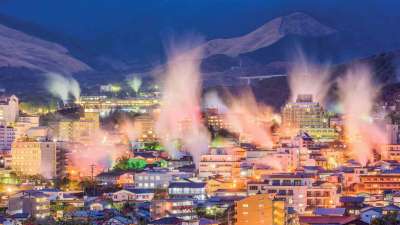
Curated for avid hikers, connect with enlightening spirits as you journey Japan's Shikoku 88 Pilgrimage Trail, carefully selecting the best walks and accommodations along the route in Tokushima, Kagawa and Ehime. Embark on spiritual self-guided walks by day and experience an authentic pilgrimage journey, staying in traditional Minshuku, Ryokan, and Shukubo temple lodging offering delicious regional cuisine and natural hot springs. From dramatic scenery, ancient paths to awe inspiring history; escape to a truly quintessential Japanese experience on this 11 days Shikoku Pilgrimage Trail that will leave you enlightened.
Begin your spiritual journey in Osaka, where you’ll journey by express train to Kyoto city. Spend a day exploring the delights and natural wonders of Japan’s former capital boasting tranquil temples and gardens and traditional teahouses. From Day 3, you begin your ...
Trip Highlights
|
|
What's Included
- 10 nights’ accommodation in 4 star equivalent accommodation / Japanese-style inns (ryokan/minshuku/shukobu)
- All breakfasts & 6 dinners
- Comprehensive route directions
- Bus tickets from Kyoto to start of trail and from end of trail to Osaka
- Pre booked and pre-paid taxis on days 4, 5, 6, 9 and 10
Itinerary
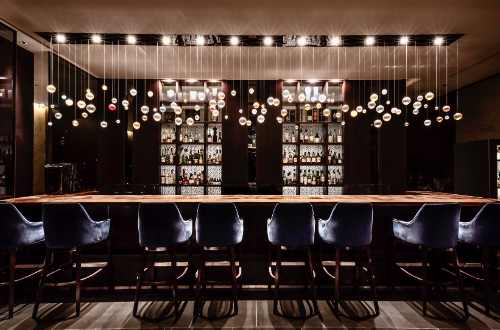 |
Today, you’ll arrive at Osaka Kansai International Airport where you’ll make your own way to Kyoto City via a 70 minutes express train. Then, take a short local taxi ride to your hotel this evening. Your home for the next two nights is a classy, modern hotel that perfectly fuses art and tradition in a seamless manner, located in the heart of Kyoto. Unwind at the bar or indulge in local and western cuisine with a modern twist at its casual restaurant. |
 Royal Park Hotel Sanjo, Kyoto
 None
None 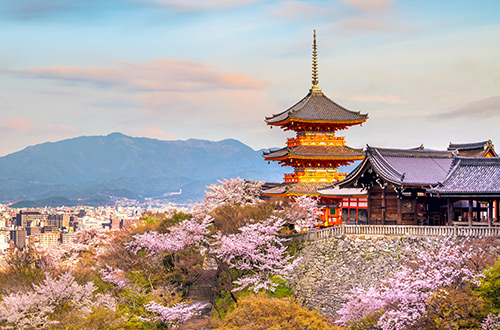 |
Enjoy a rest day in the incredible city of Kyoto, famous for its Buddhist temples, tranquil gardens, and traditional tea houses. Experience unique zen minimalism and golden glamour in the majestic Kinkakuji Temple, a structure built by a powerful overlord. Light incense, offer your prayers and ring the glorious bells with their special pulls. Feel the historic moments embedded in the Kiyomizu-dera temple, built to honour the goddess of mercy, Kannon, and it is also a UNESCO World Heritage Site. Be captivated by the intricate details that make up the architectural marvels. If you’d prefer to go a bit further, you can venture to the historical city of Nara, a thriving destination full of cultural treasures approx. 1 hour from Kyoto by train. A temple of note here is the Tōdai-ji Temple, one of the Seven Great Temples of Nara and the home to a variety of marvellous structures including the Great Buddha Hall, donned the largest wooden structure in the world. It is also a UNESCO World Heritage Site and also the headquarters of the Kevin School of Buddhism. |
Royal Park Hotel Sanjo, Kyoto
Breakfast 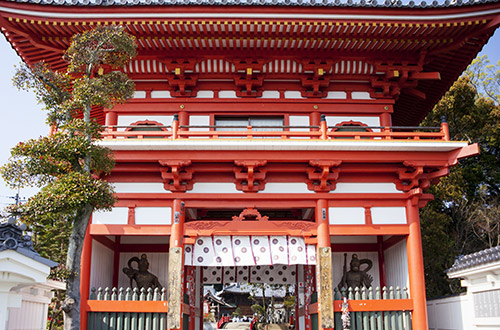 |
Level 1, Approx. 6 km (4 miles), 1-2 hours walking Savour a delightful breakfast before journeying by a long-distance bus (included) to Tokushima Prefecture with a gentle introduction to the walks on Shikoku through quiet neighbourhoods of Tokushima. Marvel at three of the most captivating temples of the whole Shikoku trail - Temple 1 Ryozen-ji, Temple 2 Gokuraku-ji and Temple 3 Konsen-ji, standing near the foot of the Sanuki Mountains in the Tokushima rift valley. See the Niō Gate, the pond filled with kaleidoscopic carp, the Thirteen Buddha Hall, the main halls, and the large gardens. Spend your night in the way of the pilgrims with a stay in a Shukubo temple lodging. Unwind in cosy ryokan-like rooms before tantalising on Buddhist ‘Shojin-Ryori’ cuisine. There is also the option of staying at a traditional Ryokan for the night. |
Shukubo Temple Lodging or Ryokan, Tokushima
Breakfast, Dinner 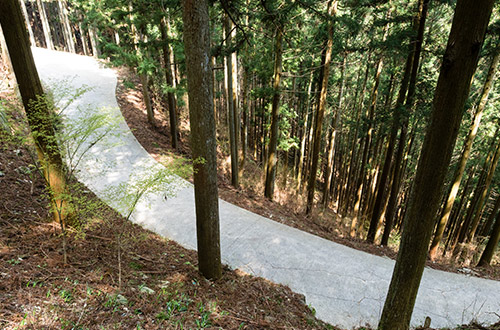 |
Level 3, Approx. 24 km (15 miles), 3-5 hours walking Wake up to a lovely breakfast this morning. Travel south by pre-booked and prepaid taxi to Temple 11 Fujii-dera, a spectacular hillside temple complex named after the wisteria that grows there. After taking your time to explore the grounds, your taxi will bring you up to Ryusian Temple, part-way up the mountain en-route to Shosan-ji. From there walk up the rest of the mountain to Temple 12 Shosan-ji, then finally descend to the east. The walk is somewhat strenuous, but quite rewarding with magnificent scenery. Walk onwards to Yorii and board a bus to the small onsen village of Kamiyama and your inn for the evening. You’ll stay at a Minshuku Guesthouse that is family-run and offers simple Japanese warmth in a traditional-style building. Relax on your tatami-mat rooms, with futons. Most minshuku do not have en-suite bathrooms as they are in older traditional wooden buildings. Toilet and bathing facilities may be shared. |
Minshuku Guesthouse or Ryokan, Kamiyama
Breakfast, Dinner 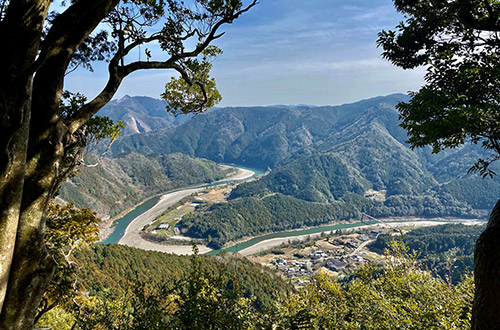 |
Level 1, Approx. 8 km (5 miles), 1-2 hours walking After breakfast this morning, start your adventure with a scenic taxi ride to one of the most beautiful and varied hikes on the entire Pilgrimage route. Reach Temple 20 Kakurin-ji “crane grove temple”, explore the many interesting details. From here, descend on the trail to the hamlet of Anan, cross the Nakagawa River and climb back up to Temple 21 Tairyuu-ji. Praise yourself for making it to one of the “nansho”, one of the tough temples to reach on foot. End the day of adventure with a thrilling cable car ride showcasing wonderful views over a cedar forest and the small town below. Afterwards, travel by bus to your homely and simply Japanese Minshuku Guesthouse or Ryokan in Tokushima. |
Minshuku Guesthouse or Ryokan, Tokushima
Breakfast, Dinner 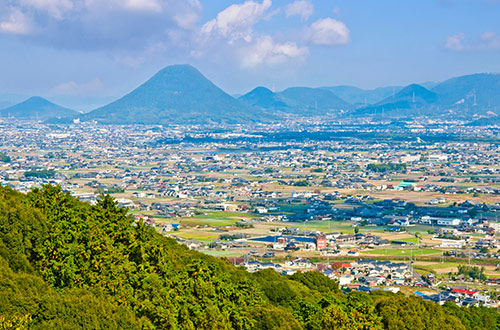 |
Level 2, Approx. 12 km (7 miles), 2-3 hours walking After breakfast today, you’ll leave Tokushima by taking the train, bus, and a pre-booked and prepaid taxi to the rewarding hike in the Northern Kagawa prefecture. Walk through lovely scenery and visit the fine collection of temples - Temple 82, standing at 365 m on the side of Mt. Aomine, part of the Goshikidai plateau overlooking the city of Takamatsu, Temple 81, standing at 280 m above sea level on the hillside of Shiromine in Sakaide, Temple 80, the home to the largest Kannon statue on Shikoku, featuring 11 faces and 42 arms. Travel onwards by train for an overnight stay in the old hot-spring town of Kotohira spa in a quaint traditional Japanese ryokan. |
Ryokan, Kotohira Spa
Breakfast, Dinner 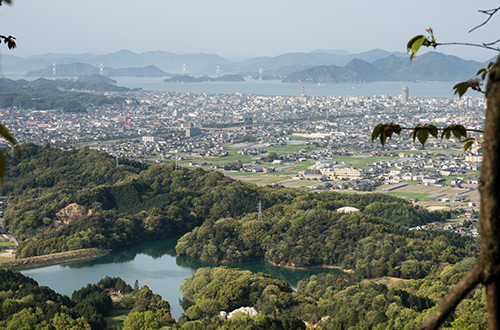 |
Level 1, Approx. 5 km (3 miles), 1-2 hours walking Enjoy a delectable breakfast this morning, afterwards, set out for Betsumyo in Northern Ehime by train and bus and begin your hike to Temple 57 Eifuku-ji, set in a beautiful bamboo grove. Notice how the walk gradually changes from urban townscape to rural farming communities before entering a forest with a steady climb to Temple 58 Senyū ji, a towering and impressive temple standing on a hillside. After visiting Temples 57 and 58, there is an option to detour to Temple 56 Taisan ji. Tonight, you’ll be staying in the Shukubo peaceful pilgrims lodgings at Senyū ji, or you could opt for a western-style hotel in the thriving city of Imabari. |
Shukubo Temple Lodging or Hotel in Imabari
Breakfast,Dinner 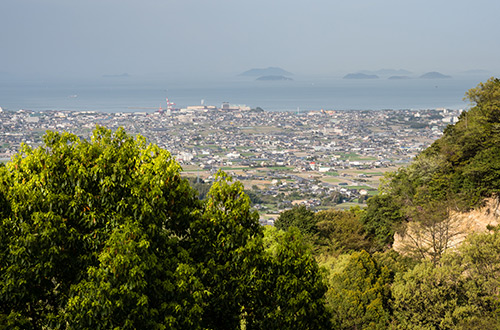 |
Level 1, Approx. 5 km (3 miles), 1-2 hours walking Start your adventure after breakfast this morning with a gentle walk down the mountain from Senyū-ji, marvel at the stunning views that accompany you and perhaps explore the small village settlements on the way. Return to the lovely town of Imabari, with an optional paved town hike to Temple 59 Iyo Kokubun, the only temple of the pilgrimage belonging to the Shingon Ritsu Sect. Take the train at the end of your walk in Iyo-Tomita to Matsuyama, followed by a tram to Dogo Onsen where you’ll be staying overnight in a tranquil Ryokan. |
Ryokan, Dogo Onsen
Breakfast, Dinner 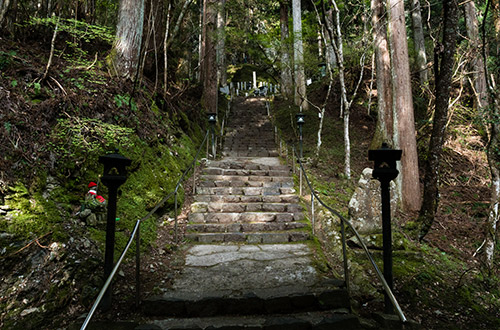 |
Level 2, Approx. 11 km (7 miles), 2-3 hours walking After a hearty breakfast, take a prepaid taxi from your ryokan to Temple 45 Iwaya-ji, a temple closely linked to Kōbō Dashi, the priest who founded Shingon Buddhism and Mount Koyo. Climb the iconic ladder to this meditation spot, offering breathtaking views over the surrounding region. From Iwaya-ji, enjoy a lovely forest hike to Temple 44 Dairo-ji, the Temple of Great Treasure, nestled in a forest of ancient sugi and hinoki cypress trees in the Kumi Highland area. Afterwards, return by bus and tram to Dogo Onsen in the evening |
Ryokan, Dogo Onsen
Breakfast, Dinner 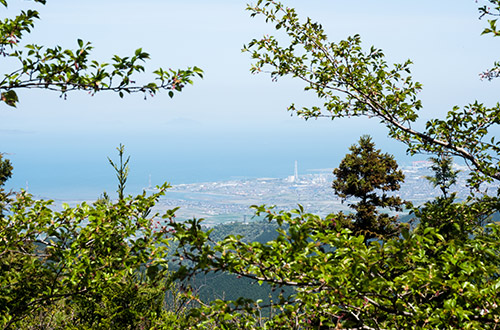 |
Level 2, Approx. 13 km (8 miles), 2-3 hours walking Start your penultimate day and the end to your pilgrimage with yet another delightful breakfast. The beginning of the end starts with a rewarding hike in the east of Ehime prefecture. Travel by tram and bus to Ooto, then take a prepaid taxi to reach the starting point. Walk to Temple 60 Yokomine-ji, an affiliate temple of the holy mountain Mt. Ishizuchi, and one of the most difficult temples to reach. After make your way to Temple 61 Kōon-ji and onwards to Temple 62, the temple of Wealth and Happiness, a feeling that you’re sure to experience walking here. The walk passes through a rural area of Shikoku and the temples are in dazzling natural settings. After the walk, travel further by train to Osaka, arriving mid-evening for your final night. Tonight, you’ll be staying at Hotel Monterey Grasmere, a 4-star modern hotel located in the heart of Osaka, offering an aura of refined elegance. Unwind in your ensuite room boasting views of Osaka city or retire at the tea lounge. For those in pursue of some adventure, can venture into the Dotonbori Shopping Street, a 10 minutes’ walk, for an array of quaint cafes and restaurants. |
Hotel Monterey Grasmere, Osaka
Breakfast 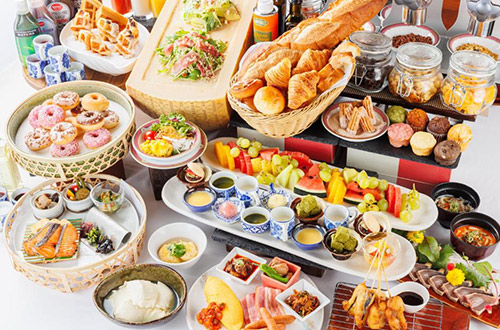 |
Savour one last breakfast, a perfect time to reflect on your incredible journey before taking the train from Osaka Namba Nankai station to Osaka Kansai Airport (approx. 35mins). NOTE: This itinerary is provided as an example only – prevailing conditions and local arrangements may cause variation. |
None
Breakfast Dates & Prices
Daily departure on request only. The published price is price guide. Please contact us for availability checking and quote. Please contact us for private departures and group bookings. Single Supplement is available on request.
More Info
- The departure and finish point is Osaka
- Major commercial flights provide convenient access to Osaka.
- Airport transfers are via train and not included.
Shikoku enjoys a humid subtropical climate (without dry season and with hot summer) in accordance with the Köppen-Geiger classification. The yearly average maximum temperature in Shikoku is 20°C (ranging from 10°C in January to 30°C in august). Annual rainfall is 2542mm, with a minimum of 91mm in January and a maximum of 365mm in June.
The walking level on this trip is rated Level 3 Moderate.
Level 1 Leisurely: Experience is not necessary; anyone fit and healthy enough to complete a weekend walk will thrive. Walks are often optional. Trails are seldom flat, so expect a reasonable number of ascents and descents. You normally walk for two to five hours per day; daily ascents will likely be around 985ft to 1,640ft (300m to 500m), perhaps with the odd day around 1,970ft (600m).
Level 3 Moderate: Expect easy, medium-length walks or harder, shorter walks. Some experience is useful, but not essential. Good health and reasonable fitness are important. There will be walks at higher altitudes and some longer, harder days. Generally, though, the underfoot conditions will be fair. A walking day is normally five to seven hours; daily ascents will likely be around 1,640ft to 2,625ft (500m to 800m), perhaps with the odd day around 2,955ft to 3,280ft (900m to 1,000m).
Level 5 Challenging: Fitness is vital with extended walking in mountainous terrain. You might also experience high altitude, challenging climates and remote locations. Trekking experience is desirable, but not vital if you are confident in your physical condition. Walking days are usually between six and eight hours, although they may be longer for passes or peaks. Daily ascents can be around 2,955ft to 3,280ft (900m to 1,000m), perhaps with the odd day around 3,610ft to 3,940ft (1,100m to 1,200m).
Level 7 Tough: Trekking experience is essential and preferably at altitude. You need complete confidence in your ability to trek for many days over difficult terrain. You may encounter extreme altitude and weather conditions and may need to use ice axes and crampons. Stamina is essential as walking days last six to nine hours (sometimes more on occasions). Daily ascents will likely be around 2,955ft to 3,280ft (900m to 1,000m), perhaps with the odd day around 3,610ft to 3,940ft (1,100m to 1,200m).
Split and optional grades: Where a trip falls between two grades, an intermediate or ‘split’ grade is used. For example, Level 2 (Leisurely/Moderate). Occasionally there are optional ascents available; in this case, the grade will be highlighted.
- Hotels: Modern western-style hotels are used. The rooms are generally smaller than equivalent hotels in the West. All have en-suite facilities, air-conditioning, TV, and fridges in rooms.
- Shukubo: These are lodgings in Buddhist temples originally meant for pilgrims, but now open to anyone. The rooms are similar to Ryokan or Minshuku, though with fewer facilities. The food is excellent vegetarian Buddhist ‘Shojin-Ryori’ cuisine. It is a wonderful experience to stay in a Shukubo and there is often the opportunity to join the early morning religious service.
- Ryokan: Ryokan are traditional Japanese-style inns. They may be in modern concrete or older wooden buildings, but the rooms are always in the Japanese style with tatami (straw) matting and futons laid out in the evening by the ryokan staff. Evening meals are served together usually in the dining room and are exquisitely prepared multicourse meals. Many ryokans have both en-suite bathrooms (except for some older buildings) and communal hot spring style baths. They are the classic Japanese experience.
- Minshuku: Minshuku are usually family-run traditional Japanese-style inns. They have tatami-mat rooms, with futons laid out in the evening for sleeping. Most minshuku do not have en-suite bathrooms as they are in older traditional wooden buildings. Compared with a ryokan, they are usually (but not always) slightly less formal, but the service and food* are just as good.
At these the inns and Shukubo, futon bedding on tatami mat is provided; toilet and bathing facilities may be shared.
Most meals will be Japanese cuisine. Vegetarian options are available but limited. Strict vegetarian diets, vegan diets, or gluten free diets will be difficult to accommodate due to the pervasiveness of the fish-based stock dashi and the use of soy sauce and miso in Japanese cuisine. Tips are not required when dining in Japan.
Onlyluxe Travel acts as travel agency and work with different tour operators.
Payment Detail
All pricing is in Australian dollars and are quoted on a per person twin share basis. A supplementary price is available (see below). Bookings are not confirmed until full payment and the signed Booking Form has been received by Onlyluxe Travel.
A non-refundable 30% deposit is payable within 7 days of your booking, with the final balance due 100 days prior to departure. If a booking is made 100 days or less before departure, the full payment is payable immediately. Last minute bookings are payable before arrival. Failure to pay on time may result in automatic cancellation of a booking with cancellation penalties payable to Onlyluxe Travel. If you pay by credit card or PayPal a surcharge will be added to the total price.
Single Supplement
All accommodation is twin share. Single guests will share with someone of the same gender. If a single room is demanded, a supplementary price of will apply. The supplementary price refers to our quotation and needs to be stipulated at the time of booking.
General Cancellation Policies
- Outside of 100 days monies will be refunded less 30% of full fee
- Within 100 days prior to arrival all monies will be forfeited
- No refunds will be given in the event of non-arrival, any unused services or unused nights due to flight or weather disruption
- We strongly recommend guests protect themselves with travel insurance and medical insurance
Please Note: Cancellations must be advised in email and will take effect from the date they are received.
Liability
The participant agrees to indemnify Onlyluxe Travel, and its servant, tour operator and agents, in relation to any liability, loss and damage which the tour operator, or its servants and/or agents may incur as a result of the participants, negligence or misconduct during the tour.
Smoking is not permitted on the bus, or in tents or in other accommodation being used by tour operator at the time that a trip is being conducted.
Child Policy
Please consult travel consultant on age limit.
Changes to Itineraries
Local conditions may necessitate changes to sightseeing, walking and driving routes, camping and accommodation locations. While every effort will be made to provide the services and experiences as offered in our brochure, on our website, and in our trip letters, we reserve the right to vary your itinerary. In the event that we are forced to change your arrangements, substitute arrangements of a similar standard will be provided. The tour operator will not be liable where interruptions to itineraries are caused by weather conditions, technical problems to transport used by the tour operator, industrial action, political or civil commotion or other circumstances beyond our control. We refer you to the conditions regarding travel insurance.
Changes in Prices
While we will do its utmost to honour its pricing unforeseen circumstances may mean that prices may be subject to change without notice.
Pre-Existing Medical Conditions and Age Limits
You need to advise Onlyluxe travel and the tour operator on any pre-existing medical condition, mobility impairment and/or disability that might reasonably be expected to increase the risk of your requiring medical attention, or that might affect the normal conduct of a trip and the enjoyment of other trip members. Onlyluxe Travel and the tour operator may require an assessment of your medical condition from a qualified medical practitioner. If you fail to adequately notify the tour operator of any pre-existing medical conditions and/or disability, the tour operator reserves the right, at its reasonable discretion, to cancel your participation in a trip at any time, including after the commencement of your trip, with no right of refund if your medical condition, mobility impairment and/or disability could be reasonably expected to affect the normal conduct of the trip and the enjoyment of other trip members.
Cancellation by The Tour Operator
The tour operator is at the mercy of nature in all her beauty and all her fury. The tour operator will under no circumstance knowingly place at risk the health and well-being of our guests and guides. In the case of natural threats, acts of God and the like (e.g. bushfires, impassable snow, etc) the tour operator may need to cancel a tour with very little notice. In some cases, this can occur after the tour has commenced. The tour operator reserves the right to cancel any tour up to 60 days prior to departure if the minimum number requirement is unable to meet for a tour. If the tour operator needs to cancel for any reason, the cost of the tour or any other costs associated with travel to the designated pick up point, overnight accommodation, meals, etc will not be covered by the Onlyluxe Travel and therefore we strongly recommend travel insurance be taken out prior to travel.
Force Majeure
'Force Majeure' means (without restriction) any event which Onlyluxe Travel or its third party providers could not, even with due care, foresee or avoid. Force Majeure covers events such as, but not limited to, adverse weather conditions, fire and all similar events beyond our control. In the case of Force Majeure Onlyluxe Travel will not accept liability, and reserves the right to change and cancel trips.
Evacuations
In rare circumstances, due to injury or unforeseen illness, the tour operator may need to evacuate you from a remote part of the walk. Helicopter evacuations are expensive and in most cases will be at a cost to the customer.
For Australian residents, under the Australian Government Medicare Act, it is prohibited for any domestic travel insurance product to provide any financial reimbursement with regard to ambulance or air ambulance services. We therefore strongly advise our customers to take specific ambulance cover through their health insurance provider. Evacuation cost will not be covered by the Onlyluxe Travel and therefore it is also strongly recommended that our customers take out travel insurance to cover (amongst other things) the costs associated with evacuation.
Travel Insurance
In view of the heavy cancellation penalties applied to cancelled reservations in certain circumstances, we strongly recommends suitable travel insurance be purchased at the time the holding deposit is paid. We recommend insurance cover that covers any loss which may be suffered due to cancellation. We also strongly recommend comprehensive travel insurance against loss of baggage and medical expenses.